
How Hidden Risk Indicators, Regulatory Pressure And Institutional Secrecy Can Turn Ordinary Customers Into Compliance Concerns
Executive Summary
A customer transfers money to a relative abroad.
Another buys religious clothing.
A third includes an Arab family name in a payment description.
None of these acts is illegal.
Yet inside a financial institution, ordinary behaviour can acquire a different meaning.
Part Five of My Morocco Observer’s Equal Treatment? investigation examines how hidden indicators, regulatory pressure and institutional secrecy can transform legitimate customers into compliance concerns.
The central question is not whether banks should detect financial crime.
They must.
It is whether systems designed to identify exceptional danger can distinguish genuine risk from ordinary life.
A customer sends money to family overseas.
The payment has a clear purpose.
The money comes from a legitimate account.
No law has been broken.
But the transfer involves a country the bank considers more difficult to assess.
A name in the payment description resembles a name appearing on a sanctions list.
A donation reaches a religious organisation.
A customer purchases a visa.
A business operates in a sector statistically associated with cash.
A family has financial relationships across several countries.
For the customer, these are ordinary parts of life.
For the bank, they may become signals.
The customer sees a transaction.
The system sees a pattern.
That difference matters because the bank possesses the power to decide what follows.
It can ask questions.
Request documents.
Delay a payment.
Increase a risk classification.
Restrict access to services.
Report an unusual transaction.
Or terminate the relationship entirely.
The customer may never be told precisely what triggered the concern.
They are expected to provide a convincing explanation without knowing which part of their life the institution has learned to distrust.
This is how normal behaviour becomes suspicious.
Banks Are Required to Be Suspicious
Banks do not choose freely whether to monitor their customers.
They are required to do so.
Dutch anti-money-laundering legislation obliges financial institutions to identify customers, understand business relationships, monitor transactions and report activity considered unusual.
Sanctions rules create further duties.
Banks must prevent funds or economic resources from reaching listed individuals and organisations.
These obligations exist for good reason.
Criminal networks use ordinary bank accounts, companies, property transactions, professional advisers and international transfers to conceal illicit money.
Terrorist financing can involve relatively small amounts.
Sanctions evasion may pass through complex chains of individuals and entities.
A bank that ignores warning signs may enable serious crime.
It can also face regulatory action, enormous financial penalties and criminal scrutiny.
The consequences of insufficient control are no longer theoretical.
In April 2025, the Dutch Public Prosecution Service announced that it would prosecute Rabobank over alleged structural failures to comply with anti-money-laundering requirements between October 2016 and the end of 2021.
According to prosecutors, the bank fell short for years in conducting customer due diligence and reporting unusual transactions.
The case followed a referral from De Nederlandsche Bank.
The allegations have not resulted in a final judicial conviction.
But the decision to prosecute illustrates the pressure surrounding every compliance decision.
When a bank fails to investigate enough, the institution may face criminal consequences.
When it investigates too much, innocent customers may experience exclusion, discrimination and loss of access to essential financial services.
That is the regulatory contradiction at the centre of modern banking.
The Incentive to Ask One More Question
A compliance officer operates inside an unequal risk structure.
When an unnecessary question is asked, the customer carries the burden.
When a genuine criminal relationship is missed, the bank carries the institutional consequences.
This naturally rewards caution.
Ask for another document.
Escalate another file.
Delay another payment.
Retain the risk classification.
End a relationship that is expensive or difficult to understand.
From inside the institution, each decision may appear responsible.
The bank can point to legislation, supervisory expectations, criminal threats and previous enforcement cases.
From the customer’s perspective, the same process can feel impossible.
One explanation produces another question.
One document generates a request for a second document.
Evidence of the origin of funds leads to questions about the origin of the other party’s funds.
A transfer completed years earlier becomes relevant again.
The customer may satisfy the factual question without ever resolving the institutional suspicion.
The process has no visible finish line.
The Rabobank Red Flags
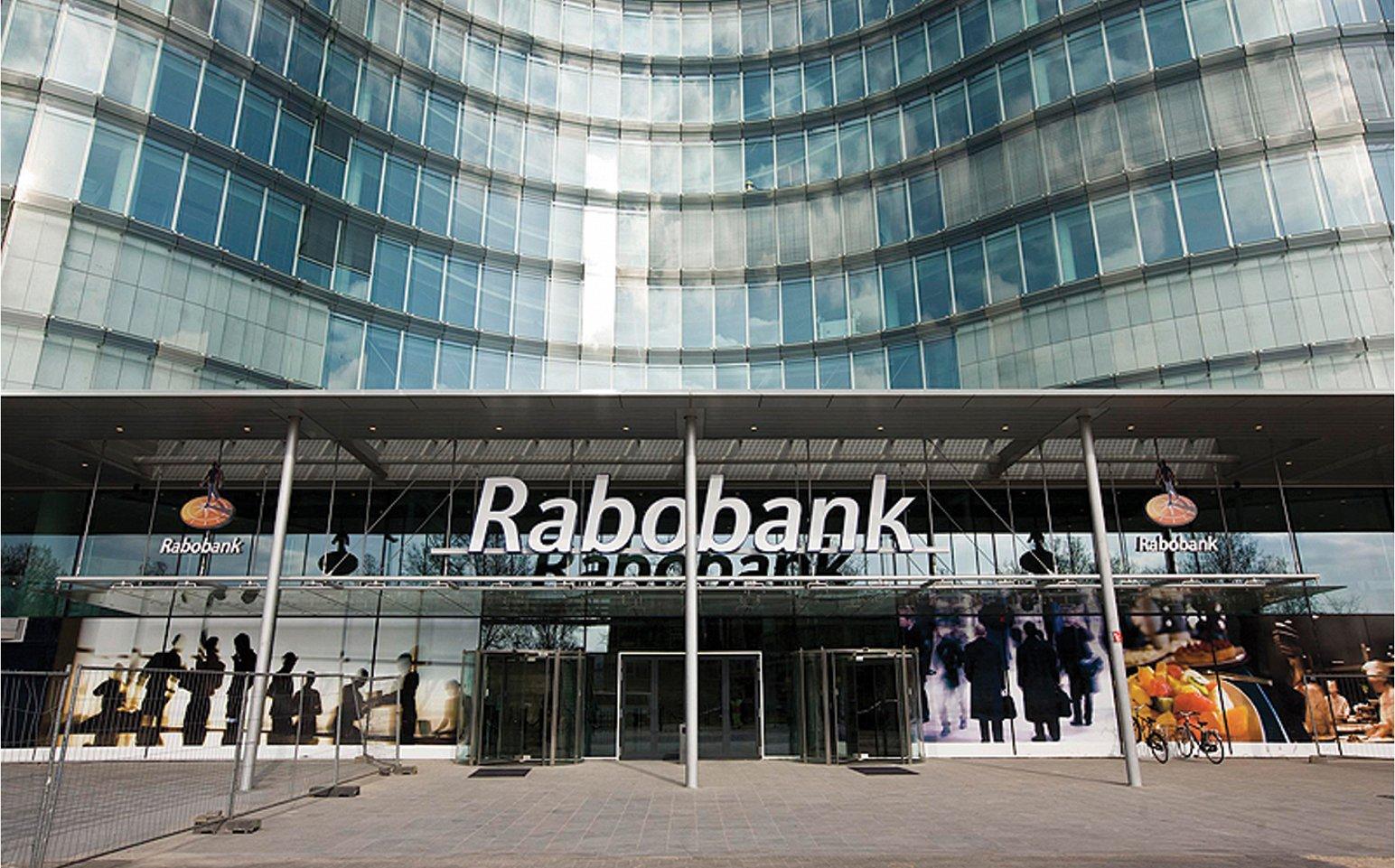
In February 2025, Dutch investigative programme Argos reported on an internal Rabobank document from 2017 concerning possible indicators of terrorist financing.
The material had been prepared during a period when Dutch authorities and financial institutions were attempting to identify people travelling to conflict areas and potential domestic terrorist networks.
The listed indicators reportedly included:
– purchasing a visa for Turkey;
– buying Islamic clothing;
– payments to religious foundations or bookshops;
– employment in the healthcare sector;
– receipt of a Wajong disability benefit;
– transactions involving particular travel or religious patterns.
Some of these factors may have appeared in genuine cases.
That does not make them meaningless.
The challenge lies in their breadth.
Purchasing religious clothing is not abnormal.
Donating to a mosque or religious foundation is not abnormal.
Working in healthcare is not abnormal.
Receiving a disability benefit is not abnormal.
Travelling through Turkey is not evidence of terrorism.
The concern raised by experts was that ordinary characteristics could acquire suspicion through combination.
A religious purchase plus a donation.
A visa plus travel.
A benefit plus a particular transaction pattern.
A customer may never know that these elements were being interpreted together.
Rabobank said the document must be understood in its historical context.
The bank stated that it was based on a very limited number of established cases, was intended for training a small specialised group and was not a formal policy document used in regular transaction monitoring.
That distinction is important.
A training document is not automatically an operational rulebook.
But training material still matters.
It teaches professionals what to notice.
It shapes which facts appear meaningful.
It creates an institutional vocabulary of suspicion.
The larger question is therefore not merely whether the document constituted formal policy.
It is how a small number of cases can become a broader framework through which thousands of ordinary customers are interpreted.
When a Small Dataset Becomes a Profile
Institutions learn from previous cases.
That is unavoidable.
If investigators repeatedly observe a particular method, transaction route or organisational structure, they should use that knowledge to identify future risks.
But learning from cases contains a danger.
A characteristic present in several offenders may also be common among thousands of innocent people.
Suppose several genuine terrorism-financing cases involved travel through Turkey.
That does not mean travel through Turkey is a strong indicator by itself.
Suppose individuals involved in a case purchased religious clothing.
That does not transform religious clothing into evidence of criminal intent.
Suppose money moved through a charity or foundation.
That does not make charitable activity inherently suspicious.
The question is not whether a variable ever appeared in a real case.
The question is how reliably it distinguishes danger from ordinary behaviour.
A weak indicator may produce thousands of alerts.
Those alerts create files.
The files create additional questions.
The additional questions may uncover inconsistencies that have nothing to do with the original suspected crime.
The system can then claim success because the review produced new concerns.
But the underlying selection method may still be poor.
A risk system should not be judged only by whether it finds something.
It should also be judged by how many innocent people it burdens in the process.
The 95% Problem

The Dutch Banking Association has acknowledged the scale of false alarms within transaction-monitoring systems.
In its proposals for reforming the gatekeeper system, it stated that approximately 95% of generated signals turn out to be false alarms.
The remaining signals may be investigated further and, where risk cannot be excluded, reported to the Financial Intelligence Unit.
This figure requires precision.
A false alarm does not necessarily mean that the system was irrational to generate the signal.
A monitoring rule may be deliberately broad because the consequences of missing one genuine threat are considered severe.
Nor does a false alarm prove discrimination.
But the figure reveals the scale of institutional uncertainty.
For every signal ultimately considered meaningful, many more legitimate transactions may require review.
That cost is not carried only by banks.
Customers carry it through:
– delayed payments;
– document requests;
– unexplained questions;
– restricted accounts;
– anxiety;
– interrupted business;
– damaged relationships with suppliers or family;
– the possibility of losing access to banking altogether.
A system with a high false-positive rate may still serve a legitimate purpose.
But it creates a corresponding duty to minimise the burden imposed on innocent customers.
One in Three
Research commissioned by the Dutch Ministry of Finance found that around one in ten people reported experiencing discrimination in interactions with banks and payment institutions.
Among people with a migration background, the figure rose to approximately one in three.
The research was broader than anti-money-laundering controls alone.
But the application of those rules was frequently identified as a contributing factor.
A government briefing summarising the findings went further.
It stated that banks had asked questions not required by the anti-money-laundering framework and that banks and payment institutions did not always apply the law correctly.
Reported experience is not the same as a legal finding.
A strict but justified review may feel discriminatory to the person affected.
The customer may not know all the information available to the institution.
Different customers also conduct different types of business.
International transfers, foreign companies and cash-intensive activities can require more examination than domestic salary payments.
But a disparity of this size cannot be dismissed as misunderstanding alone.
When one part of the population reports the same problem several times more frequently than another, the burden of explanation shifts towards the institutions producing the difference.
The Radar Difference
A separate Radar panel survey of more than 18,000 people found another substantial gap.
Among respondents with a Western background and Western-sounding surname, 9% reported having undergone a bank review for money laundering or terrorist financing during the previous five years.
Among respondents with a non-Western migration background and a non-Western-sounding surname, the figure was 20%.
Of the latter group who had been reviewed, 74% suspected that their origin or surname had influenced the selection.
These results must be interpreted carefully.
The Radar panel was not a randomly selected sample of the entire Dutch population.
The findings do not prove that every difference resulted from unlawful discrimination.
Personal suspicion cannot establish what an internal bank model actually used.
But the survey adds another independent signal.
Customers from particular backgrounds do not merely report more intrusive experiences.
They report them at materially higher rates.
The same groups are more likely to describe family payments, international connections and names as possible triggers.
That pattern requires measurement inside the banks themselves.
Without internal impact data, the public cannot determine whether the disparity reflects genuine differences in transaction risk, proxy-based selection or a combination of both.
The Name That Triggered the System
The Netherlands Institute for Human Rights has examined how apparently neutral transaction screening can produce unequal effects.
In one case, ING blocked transfers from a customer to another account held in his own name.
The payment description contained the Arab-sounding name of his brother.
That name partially matched names appearing on sanctions lists.
ING then requested further information.
The Institute accepted that sanctions screening served a legitimate and important purpose.
It also accepted that the bank did not explicitly select the customer on the basis of race.
But sanctions lists predominantly contain non-Dutch-sounding names.
A screening method built around partial name matches therefore affects customers with such names more frequently.
The Institute concluded that ING’s method produced indirect discrimination and had not been sufficiently justified as necessary and proportionate in the case assessed.
This is a crucial distinction.
A system can pursue a lawful objective.
It can apply the same formal rule to every customer.
It can operate without discriminatory intent.
And it can still produce an unlawful unequal effect.
The problem was not that the bank used a prohibited field labelled ethnicity.
The problem was that a neutral-looking method reproduced origin through names.
When One Bank Trusts Another
A separate case involving ASN Bank exposed another form of institutional risk.
A customer attempted to send money for medicine to his sister in Palestine.
A German intermediary bank declined to process the payment.
ASN returned the money but did not meaningfully investigate why the intermediary bank had refused it.
The Netherlands Institute for Human Rights concluded that ASN could not simply distance itself from the decision of the intermediary institution.
To exclude discrimination, it should have examined the reason.
Because it failed to do so, it could not rebut the presumption of racial discrimination.
This case matters beyond one payment.
It illustrates how institutional decisions travel.
One bank creates a restriction.
Another bank adopts the result.
The customer receives the consequence.
Nobody takes full responsibility for the original reasoning.
A risk decision can therefore gain authority through transmission even when the institution passing it onward does not understand how it was made.
That is precisely the mechanism examined in Parts III and IV of this series.
Repetition is not independent confirmation.
Institutional acceptance is not the same as verification.
Rabobank and Nationality
Rabobank has also been subject to a formal equality ruling.
In 2023, the Netherlands Institute for Human Rights concluded that the bank had made prohibited discrimination on the ground of nationality through conditions in its acceptance policy for a foundation seeking a business account.
The foundation had directors living in Suriname.
Rabobank required a specified number of directors to have Dutch residential addresses and private accounts with the bank.
The bank argued that the conditions helped it comply with sanctions obligations and made customer assessment manageable and consistent.
The Institute accepted that operational feasibility and legal compliance were legitimate concerns.
But it concluded that the residence requirement disproportionately disadvantaged people of non-Dutch nationality and had not been objectively justified.
The importance of the case lies not in proving that all Rabobank acceptance policies were discriminatory.
It shows how a rule introduced to reduce complexity and prevent arbitrary decision-making can itself create prohibited unequal treatment.
Standardisation can reduce individual bias.
It can also institutionalise it.
Fifty-Two Financial-Sector Reports
In its 2024 discrimination monitor, the Netherlands Institute for Human Rights recorded 52 reports involving financial institutions.
Across all sectors, it received 1,847 reports of suspected discrimination and examined 621 requests for formal judgments.
It issued 110 decisions.
The Institute reported that discrimination was established in 40% of those decisions.
That percentage does not mean 40% of all reports were upheld.
It relates only to the smaller group of cases that reached a formal decision.
The distinction matters because the path from harmful experience to legal judgment is long.
A customer must first understand that something may have gone wrong.
They must identify the responsible institution.
They must preserve documents.
They must complain.
They may need legal assistance.
They must continue while payments, salaries, businesses or family obligations remain affected.
Most experiences will never become formal judgments.
That is why official decisions reveal important legal failures but cannot measure the full scale of the issue.
Ten Thousand Customers a Month
In 2024, an internal Rabobank presentation reported by Follow the Money and NOS revealed that the bank had been ending relationships at a rate of around 10,000 customers per month during a period of intensified anti-money-laundering enforcement.
Two years earlier, the figure had reportedly been closer to 1,000 per month.
A senior bank executive explained that Rabobank had become better at identifying customers who exceeded its risk appetite.
He also stated that the group did not consist only of “bad people”, but included customers with whom the bank did not feel comfortable under the laws and regulations it was required to follow.
That wording is striking.
“Comfort” is not a legal finding.
It reflects institutional risk tolerance.
Rabobank explained that the temporary peak had several causes.
The figures included:
– customers linked to fraud cases;
– customers unwilling to provide necessary information;
– administrative clean-up;
– business customers whose companies no longer existed;
– people who had chosen to leave themselves.
The 10,000 figure therefore cannot be presented as 10,000 customers expelled for suspected crime.
But it demonstrates the scale of the system.
Thousands of decisions were being made every month about who remained acceptable to the institution.
Rabobank employed more than 8,000 people in financial-crime functions and spent approximately â¬840 million in 2023 on those efforts.
This is no longer a marginal compliance department.
It is an institutional system operating at industrial scale.
At that scale, even a small error rate can affect large numbers of people.
The Black Box
Banks do not publish the full indicators used in transaction monitoring.
Their argument is understandable.
If criminals knew every threshold, rule and detection pattern, they could structure their behaviour to avoid them.
Confidentiality protects the effectiveness of the system.
But confidentiality also creates a severe imbalance.
The bank knows:
– which alert was generated;
– which variable influenced the risk score;
– whether the customer matched a name, country or behavioural pattern;
– which internal guidance shaped the review;
– whether the case was escalated by a machine or a person;
– what would be required to close the investigation.
The customer knows only that questions arrived.
They may be told that the bank is legally required to investigate.
They may be warned that failure to cooperate can end the relationship.
They may never receive a meaningful explanation after satisfying every request.
The institution’s secrecy is justified by the threat of evasion.
The customer’s ignorance is then treated as a necessary consequence.
But a person cannot effectively challenge a decision whose basis remains hidden.
The Netherlands Institute for Human Rights has therefore argued that banks should be required to explain why customers were selected.
The purpose would not be to reveal criminal-detection manuals.
It would be to provide enough information for effective legal protection.
There is a difference between explaining the relevant concern and publishing the precise monitoring threshold.
Modern compliance too often treats those two things as identical.
The Unequal Burden of Explanation
The bank asks the customer to explain.
The customer cannot ask the system to explain itself.
This is the procedural asymmetry at the heart of financial risk profiling.
A customer may need to demonstrate:
– the source of funds;
– the purpose of a transaction;
– the relationship with a recipient;
– the economic logic of a company;
– the origin of savings;
– the identity of a foreign counterparty;
– the legitimacy of family support.
Those questions may be justified.
But the bank may not disclose:
– why this customer was selected;
– whether others conducting comparable activity were treated similarly;
– which data were considered;
– whether the risk indicator has been removed;
– how long the classification will remain;
– whether the same information has influenced other products.
The customer must be transparent.
The system remains opaque.
That imbalance becomes especially serious when access to banking determines access to salaries, housing, commerce and participation in the formal economy.
A bank account is technically a private service.
In practice, it is essential infrastructure.
When Safety Crowds Out Rights
The Netherlands Institute for Human Rights has warned that the current implementation of anti-money-laundering and sanctions obligations can place several rights under pressure.
Not only the right to equal treatment.
Also:
– privacy;
– property;
– access to financial services;
– effective legal protection.
The Institute concluded that banks were taking too few targeted and structural measures to prevent discrimination proactively.
It also observed substantial differences between institutions.
Some had developed more concrete safeguards.
Others relied on fragmented policies, broad commitments or general training.
The problem is not that banks completely ignore equality.
The problem is that crime prevention is operationalised through detailed models, teams, rules and escalation procedures, while human-rights protection often remains a general principle.
One side of the balance has systems.
The other has intentions.
The Supervisory Contradiction
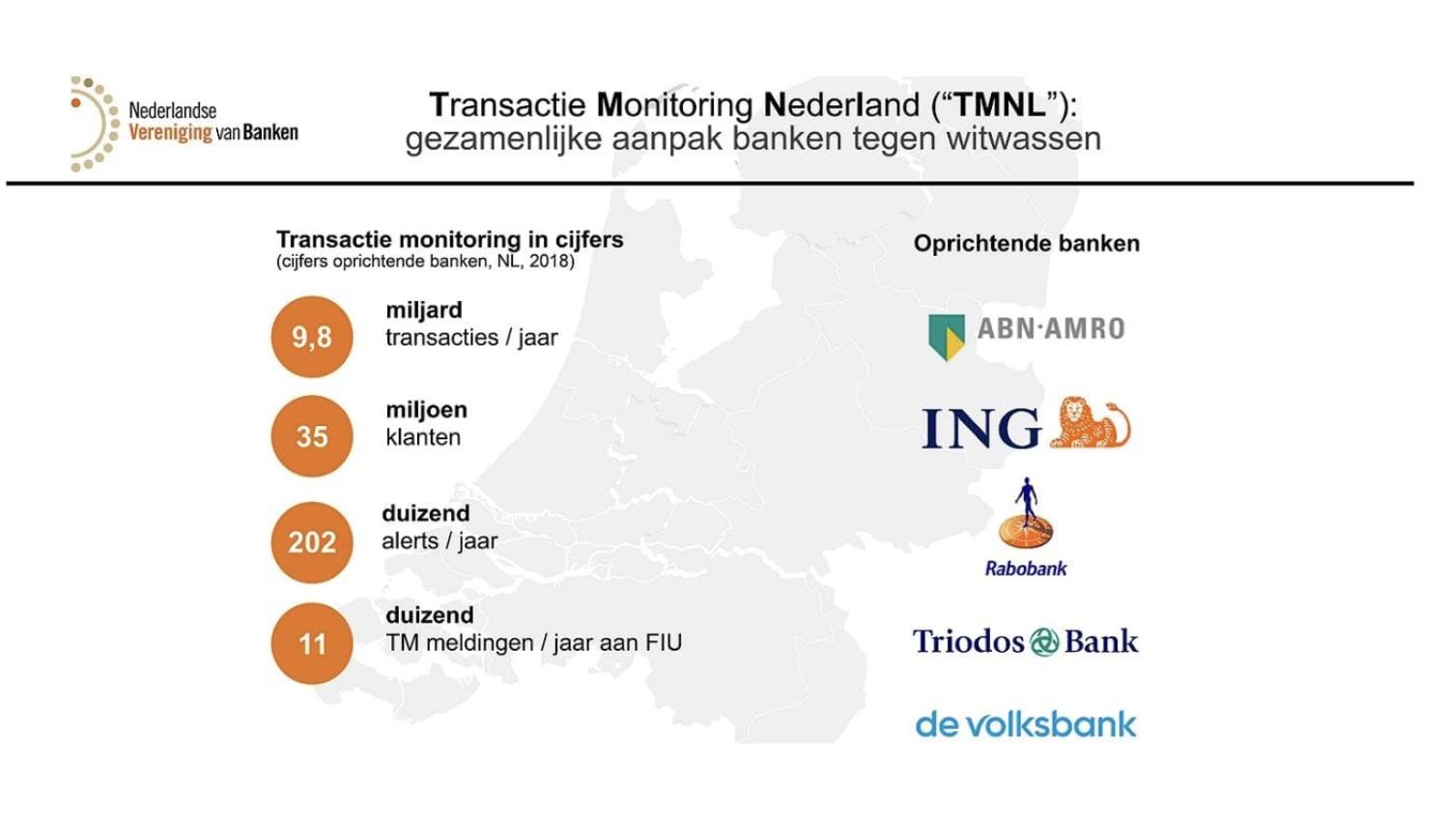
Banks are judged by multiple authorities operating under different mandates.
The Public Prosecution Service asks whether anti-money-laundering duties were breached.
De Nederlandsche Bank asks whether financial-integrity risks are controlled.
The Financial Intelligence Unit receives unusual-transaction reports.
The Netherlands Institute for Human Rights examines unequal treatment.
The Dutch Data Protection Authority examines the use of personal information and algorithms.
Courts examine contracts, proportionality and legal rights.
Each institution may be correct within its own mandate.
Together, they create competing pressures.
A bank may be criticised for insufficient customer investigation.
It may also be criticised for asking questions the law did not require.
It may be punished for missing one criminal relationship.
It may also be found to have discriminated through an overly broad screening method.
It may be expected to keep monitoring criteria confidential.
It may also be required to provide enough transparency for customers to defend themselves.
This is not an excuse for unlawful conduct.
It is the environment in which unlawful or disproportionate conduct can emerge.
The solution cannot be to choose between financial security and equal treatment.
Both are legal obligations.
The challenge is to design a system capable of respecting both simultaneously.
What Banks Are Entitled to Say
Fair journalism must present the strongest banking response.
Financial crime is complex.
Terrorist financing may involve small and ordinary-looking transactions.
Sanctions violations can occur through intermediaries and indirect ownership.
Customers do not always tell the truth.
Documents can be false.
Companies can conceal beneficial owners.
International transactions can create genuine jurisdictional and verification difficulties.
A bank cannot always explain every detection method without weakening it.
False positives are sometimes the price of detecting risks that would otherwise remain invisible.
A customer who refuses to provide legally required information may leave the bank unable to manage the relationship.
Banks are also entitled to state that differences in treatment may reflect differences in activity rather than identity.
A domestic salary account is simpler than an international trading company.
A conventional employee is easier to assess than an entrepreneur with several foreign counterparties.
A payment within the Netherlands may require less analysis than one passing through a higher-risk jurisdiction.
All of these arguments are legitimate.
But they do not resolve the issue.
A legitimate objective does not make every indicator proportionate.
A difficult customer is not necessarily a dangerous customer.
International complexity is not evidence of crime.
A false-positive problem cannot be transferred entirely to the people mistakenly selected.
And secrecy does not remove the duty to provide effective redress.
What Banks Must Be Able to Demonstrate
A credible system should be able to answer difficult questions.
Which indicators trigger additional scrutiny?
How were those indicators validated?
How many genuine cases were used to create them?
How common are the same characteristics among innocent customers?
How often do alerts prove false?
Which groups carry the largest share of false positives?
Do religious, national or international characteristics operate as proxies?
Are analysts trained to challenge the initial alert?
Can a customer’s risk profile return to normal?
How quickly?
Are satisfied investigations actually closed, or do earlier flags continue to influence later decisions?
How many customer relationships are terminated because risk is proven?
How many are terminated because the customer is too costly or complex to assess?
What happens when one bank or intermediary institution creates a restriction that another bank adopts?
Who is responsible for investigating the original reason?
How many complaints lead to correction?
How many customers abandon the process before obtaining an answer?
These questions do not require banks to reveal how criminals can escape detection.
They require institutions to understand the collateral damage created by their own systems.
Correction After the Damage
The Netherlands Institute for Human Rights reported that 81% of organisations took measures after one of its judgments.
That is encouraging.
It shows that formal accountability can produce change.
Policies can be revised.
Training can be introduced.
Complaints procedures can improve.
Discriminatory requirements can be removed.
But it also raises a more difficult question.
Why must a customer endure the entire process before the institution begins correcting the system?
By the time an official judgment arrives:
– the payment may already have failed;
– the family may have gone without money;
– the business relationship may have collapsed;
– the account may have been closed;
– the customer may have spent months or years pursuing the complaint;
– trust may already be destroyed.
A system should not measure success only by whether it corrects itself after losing a case.
It should measure how often its safeguards prevent the case from arising.
When Normal Becomes Suspicious
The danger does not begin when banks detect a genuine criminal pattern.
It begins when ordinary characteristics are given a criminal meaning without sufficient individual evidence.
A name resembles another name.
A donation reaches a religious institution.
A customer sends money to family.
A person travels through a particular country.
A business handles cash.
A director lives abroad.
None of these facts is meaningless.
Context matters.
Patterns matter.
Banks must ask questions.
But a risk indicator should remain a reason to examine, not a substitute for what the examination must establish.
Normal life becomes suspicious when the institution stops distinguishing between correlation and guilt.
When group characteristics become individual evidence.
When a broad alert becomes a permanent profile.
When repeated questioning is mistaken for repeated confirmation.
When silence about the system prevents the customer from correcting it.
The customer should not be required to choose between complete exposure and financial exclusion.
The bank should not be forced to choose between ignoring crime and treating complexity as danger.
The answer lies in proportionality.
Better indicators.
Better data.
Fewer false positives.
Real human review.
Clear routes to correction.
Transparent explanations that protect both the customer and the integrity of detection systems.
Independent oversight capable of examining not only whether banks detect enough risk, but whether they impose too much suspicion on people who present none.
The customer sends money to family abroad.
The purchase is ordinary.
The name is a family name.
The bank generates an alert.
The system asks for an explanation.
The customer provides one.
The question is:
Will the system ever stop asking?
Because a financial system does not become secure merely by generating more alerts.
It becomes secure when it can distinguish the dangerous from the unfamiliar.
And it becomes just when ordinary people are not forced to prove that ordinary life is innocent.
This is Part Five of MMO’s “Equal Treatment?” investigation.
Sources & Methodology
This investigation is based on official prosecutorial announcements, government research, supervisory publications, equality decisions, banking-sector documentation and established public-interest journalism concerning customer due diligence, sanctions screening, transaction monitoring, discrimination and financial exclusion.
The principal sources include:
– Dutch Public Prosecution Service, decision to prosecute Rabobank. The OM alleges that Rabobank structurally breached anti-money-laundering duties during the period from October 2016 to the end of 2021. The prosecution decision is not a final judicial conviction. https://www.om.nl/actueel/nieuws/2025/04/09/om-gaat-rabobank-dagvaarden
– Netherlands Institute for Human Rights, analysis of discrimination by financial institutions. The Institute reported that 9% of respondents suspected discrimination by financial institutions, rising to 32% among people with a non-Western migration background, and stated that targeted structural preventive measures remained insufficient. https://www.mensenrechten.nl/actueel/weblogs/toegelicht/2024/discriminatie-door-financiele-instellingen-veelvoorkomend-probleem-zonder-gerichte-maatregelen
– Netherlands Institute for Human Rights, 2024 discrimination monitor. The Institute received 52 reports involving financial institutions and described formal findings involving banking discrimination on grounds including race and nationality. https://www.mensenrechten.nl/actueel/nieuws/2025/01/29/discriminatiemonitor-2024-discriminatie-door-banken-in-beeld
– Netherlands Institute for Human Rights, Decision 2023-22 concerning Rabobank. The Institute concluded that Rabobank made prohibited discrimination on the ground of nationality through residence requirements in its acceptance policy for a foundation seeking a business account. https://oordelen.mensenrechten.nl/oordeel/2023-22
– Netherlands Institute for Human Rights, Decision 2024-63 concerning ING. The Institute concluded that partial name-matching against sanctions lists produced indirect discrimination and was not sufficiently shown to be necessary and proportionate in the case assessed. https://oordelen.mensenrechten.nl/oordeel/2024-63
– Netherlands Institute for Human Rights, Decision 2024-74 concerning ASN Bank. The Institute found discrimination after the bank failed to investigate why an intermediary institution had rejected a payment to Palestine. https://oordelen.mensenrechten.nl/oordeel/2024-74
– Ministry of Finance briefing on commissioned research. The briefing states that one in ten people reported discrimination in interactions with banks or payment institutions, rising to one in three among people with a migration background, and notes that banks sometimes asked questions beyond what the Wwft required. https://www.rijksoverheid.nl/site/binaries/site-content/collections/documents/2024/07/02/introductiedossier-bewindspersonen-ministerie-van-financien/2024-1987%2BMinFin%2BIntroductiedossier%2Bdeel%2BII%2B-%2B2024%2B-%2Bversie%2B2%2Bjuli%2B2024_def.pdf
– Dutch Banking Association, NextGen Poortwachters. The association stated that approximately 95% of transaction-monitoring signals were false alarms and described the volume of reports submitted by banks to FIU-NL. https://www.nvb.nl/media/czxdynla/nextgen-poortwachters-position-paper.pdf
– NOS reporting on Rabobank’s intensified compliance programme. The report described a temporary peak of approximately 10,000 customer exits per month, more than 8,000 financial-crime employees and around â¬840 million in related expenditure during 2023. Rabobank said the exits arose from multiple categories and were not all based on suspected criminal conduct. https://nos.nl/artikel/2541247-rabobank-stuurde-elke-maand-10-000-klanten-weg-na-strenger-witwasbeleid
– Argos investigation into Rabobank’s 2017 internal red-flag document. The reporting described broad potential terrorism-financing indicators and included Rabobank’s response that the material was historical training documentation for a small specialised group rather than regular transaction-monitoring policy. https://argos.vpro.nl/artikelen/met-deze-lijst-zocht-de-rabobank-naar-terrorismefinanciers
– De Nederlandsche Bank publications on proportionality and indirect discrimination. DNB has recognised the risk that anti-money-laundering controls may impose unnecessary burdens, restrict access to services and indirectly discriminate, especially in low-risk cases. https://www.dnb.nl/en/sector-news/supervision-2025/q4/proportionality-in-perspective-proportionate-application-of-wwft-allows-for-more-tailored-solutions/
Survey findings and customer experiences do not automatically establish unlawful discrimination in individual cases.
A compliance alert, unusual-transaction report or customer review does not automatically establish criminal conduct.
MMO distinguishes between reported experiences, formal equality decisions, regulatory findings, prosecutorial allegations and its own institutional analysis.
My Morocco Observer received no funding or compensation from Rabobank, ING, ASN Bank, any other financial institution, regulator, public authority, campaign group or other party mentioned in this investigation.
Any institution facing substantive criticism will be offered a full opportunity to respond.
Call for Evidence
My Morocco Observer is seeking documented experiences involving bank risk classifications, transaction monitoring, sanctions screening, account restrictions and the termination of financial services.
MMO invites customers, entrepreneurs, bank employees, compliance professionals, lawyers, academics, regulators, investigators and whistle-blowers to contribute evidence or expertise.
MMO is particularly interested in material concerning:
– unexplained transaction blocks;
– repeated source-of-funds investigations;
– name matches involving sanctions screening;
– religious, national or international characteristics used as risk indicators;
– family transfers subjected to repeated scrutiny;
– account closures following customer due diligence;
– cases in which a risk profile remained after questions were answered;
– cases in which a customer was classified or described as “high risk” without a meaningful explanation;
– cases in which a bank refused to disclose why a payment, account or customer relationship was restricted;
– internal guidance concerning transaction alerts;
– false-positive data;
– complaints that led to policy changes;
– cases in which a bank refused to explain why a customer was selected;
– effective safeguards that prevented discriminatory or disproportionate outcomes.
Submission does not guarantee publication and does not imply that MMO accepts an allegation as fact.
Claims will be independently assessed.
Supporting documents may be requested.
Confidentiality can be discussed with sources.
Any individual or institution facing substantive allegations will be offered a full right of reply.
About the Investigation
Equal Treatment? is an ongoing My Morocco Observer investigative series examining institutional decision-making, proportionality and public trust in Europe.
MMO bases its reporting on official documents, public data, legal decisions, expert analysis and verified personal accounts.
The purpose is not to presume guilt or innocence.
It is to establish whether the promise of equal treatment survives contact with institutional practice.